
Does Kuwait have hard water? There is no reliable country-wide answer for a commercial building. Kuwait's public supply uses desalinated water and blending as part of production, while a hotel's, restaurant's or office's actual inlet can also be affected by storage tanks, pumps and internal plumbing. The right decision comes from measuring the water at the route that will feed the equipment.
This guide explains how to test hardness and related chemistry, compare supply and building-side points, and decide whether the evidence supports softening, particulate or carbon filtration, reverse osmosis or no additional treatment.
TL;DR
- Do not specify a softener from a general statement that Kuwait is hard or soft. Test the proposed treatment inlet.
- Kuwait's Ministry of Electricity, Water and Renewable Energy describes desalinated water being mixed with brackish water and monitored before distribution.[1]
- Hardness and TDS are different. Hardness mainly reflects calcium and magnesium; TDS covers a broader dissolved load.
- Compare the building inlet, tank or booster outlet and equipment inlet when storage and internal distribution could change the result.
- Select treatment from the measured problem, required outlet quality, flow, pressure, demand and maintenance plan.
In this article
- The direct answer: hardness varies by route
- How Kuwait produces and conditions supplied water
- Use a three-point commercial sampling plan
- Test hardness beside TDS, alkalinity and chloride
- Choose softening, filtration or RO from the result
- Apply the evidence to hotels, restaurants and offices
- Write a Kuwait treatment specification
- Frequently asked questions
The direct answer: hardness varies by route
Hard water contains enough dissolved calcium and magnesium to create operational effects such as scale. The result is usually reported as total hardness expressed as calcium carbonate. That number is different from TDS and should be measured directly when scale protection or softening is under consideration.
Desalination removes much of the source water's dissolved mineral content. Final supplied water is not simply untreated seawater, however, and it is not useful to assume that every Kuwait property receives an identical mineral profile. Production, blending, distribution, site storage and internal pipework all sit between the source and the appliance.
For a commercial buyer, “Does Kuwait have hard water?” should become four practical questions:
- What is the total hardness at this building's inlet?
- Does storage or internal distribution change it?
- What hardness range does the protected equipment require?
- Can the proposed system meet that target at peak flow?
This approach prevents both over-treatment and under-treatment. A softener installed without a confirmed hardness duty adds maintenance without proving the need. A site that ignores measured hardness can leave hot equipment exposed to avoidable scale.
How Kuwait produces and conditions supplied water
The Ministry of Electricity, Water and Renewable Energy's Water 2021 report describes distilled water from Kuwait's desalination plants being mixed with brackish water in defined proportions, then subjected to chemical and bacteriological monitoring before entering the distribution network.[1] The same report describes quality-control activity across distillation and blending stages.
That official production context supports two conclusions for a commercial specification:
- desalination is central to the public water route;
- the final mineral profile should be measured rather than inferred from seawater or from desalinated water in isolation.
The public-system result is only the first part of the commercial route. Many buildings use ground or roof tanks, booster pumps and separate pressure zones. Water can then travel through long branches or existing treatment before reaching a coffee machine, boiler, dishwasher or drinking outlet.
Map the route and identify responsibility at each stage. Note tank inspection and cleaning records, turnover, pump arrangement, recent plumbing work and low-use branches. If the building entry result differs from the equipment inlet, investigate the route before expecting a downstream treatment unit to correct every upstream condition.
Use a three-point commercial sampling plan
Most Kuwait commercial projects can begin with three points, adding more only where the comparison answers a decision.
| Sample point | Purpose | When it matters |
|---|---|---|
| Building inlet | Establishes the supplied baseline | Every project where the point is accessible |
| Tank or booster outlet | Shows the result after normal site storage and pumping | Hotels, towers, malls and tank-fed premises |
| Proposed treatment inlet | Defines what the new system must handle | Every treatment specification |
A critical point of use may be added where a long branch, existing cartridge or operating complaint needs investigation. Before-and-after samples can assess whether an existing stage changes the intended parameter.
Sample under normal occupancy and flow. Record the exact valve or tap, date, time, tank status, pump condition and whether existing treatment was in service. Do not combine points in one bottle.
Use the laboratory's bottles, preservation instructions and delivery times. Microbiological and chemical parameters may require different methods. For a defensible report, check the laboratory's accreditation scope for the named test. A published Kuwait laboratory scope accredited to ISO/IEC 17025:2017 includes methods for total hardness, total dissolved solids, pH, conductivity, chloride and other water parameters, showing that these measurements can be commissioned locally.[2]
Accreditation does not mean every accredited laboratory holds every method. Match the requested parameter to the listed scope.
Test hardness beside TDS, alkalinity and chloride
Hardness is only one part of the mineral picture. A useful panel depends on the equipment and treatment decision.
- Total hardness as CaCO3: the main result for scale and softening.
- Conductivity or TDS: a broad view of dissolved mineral load and a screening input for membrane treatment.
- pH and alkalinity: relevant to stability, buffering, coffee extraction and treatment compatibility.
- Chloride and sulphate: useful where material compatibility, taste or the wider mineral balance matters.
- Sodium: helps interpret a broader chemistry report and any ion-exchange route.
- Turbidity or suspended solids: supports sediment-filtration decisions.
- Residual disinfectant: helps define taste, carbon-treatment and downstream compatibility questions.
A handheld TDS meter normally estimates dissolved load from conductivity. It does not identify calcium or magnesium, so it cannot decide whether a softener is required. Two samples can have similar TDS but different hardness because their dissolved ions differ.
Use hardness for scale decisions. Use TDS as one part of a wider assessment where dissolved-solids reduction is being considered. Use targeted laboratory analysis when the requirement concerns a named substance or a formal outlet limit.
Do not interpret a low TDS value as a hygiene certificate. Chemistry, storage condition and microbiological risk are separate questions that need their own methods and responsible site processes.
Choose softening, filtration or RO from the result
The correct route follows the measured pattern.
Confirmed hardness is the dominant issue
Assess ion-exchange softening when measured hardness conflicts with the equipment requirement or causes a defined scale duty. The Regal 250 water softener is one compact small-commercial option to size against demand, peak flow, regeneration and required continuity.
regal-250-water-softener
Sediment or turbidity is the defined issue
Find out whether material enters with the supply or appears after storage and plumbing. The Regent Sediment 3072 is a depth-filtration route to assess against loading, pressure loss and backwash or cleaning requirements.
regent-sediment-3072
Chlorine, taste or odour is the issue
Confirm the inlet condition and target before selecting carbon. The Regent Carbon 3072 is an activated-carbon example to compare against flow, contact time and media-change criteria.
regent-carbon-3072
Dissolved-solids reduction is genuinely required
Reverse osmosis should answer a defined outlet need, not a general concern about PPM. The Majestic RO is a commercial membrane route to assess against feed chemistry, pretreatment, output demand, storage and reject-water drainage.
majestic-ro
A treatment train can combine stages, but each stage should have a stated job. Sediment filtration may protect carbon or membrane equipment. A softener may protect a hot-water branch while drinking outlets follow a different treatment route.
Apply the evidence to hotels, restaurants and offices
A hotel can have several water duties within one building. Guest hot water, laundry, kitchens, coffee bars and drinking outlets may require different targets and peak flows. Compare the main route with the actual protected branch before proposing central or point-of-use treatment.
A restaurant should match results to appliance manuals. Espresso equipment, ice machines, combi ovens and dishwashers do not automatically share one ideal water profile. Hardness, alkalinity, dissolved load and flow all matter, but in different combinations.
An office may focus on taste, sediment and consistent drinking-water service. Do not add reverse osmosis simply because a meter displays a number. Define the required change and consider service access, cartridge life and the ability to monitor performance.
In every case, test after a material change: tank work, a new branch, altered supply routing, unexplained scale, recurring sediment, changing taste or unexpectedly short consumable life.
Write a Kuwait treatment specification
Turn the report into a buyer's brief containing:
- a simple water-route drawing and sample-point codes;
- laboratory results, methods and dates;
- typical and worst observed inlet values where multiple samples exist;
- the equipment or process requirement;
- target outlet values for named parameters;
- daily demand and peak flow;
- static and minimum dynamic pressure;
- operating hours and permitted interruption;
- footprint, access, power and drainage;
- monitoring and consumable-change criteria;
- commissioning tests and maintenance responsibility.
Ask suppliers to explain what each stage changes, the inlet assumptions behind its performance and how loss of performance will be detected. “Improve water quality” is not a measurable target.
Commission the system under representative flow. Record inlet and outlet results, settings, initial pressure loss and sample-point labels. Keep that record as the baseline for servicing and fault finding.
Frequently asked questions
1. Does Kuwait have hard water everywhere?
No single country-wide answer is reliable for a building. Test total hardness at the proposed treatment inlet and compare it with the equipment requirement.
2. Is desalinated water always soft?
Desalination removes much of the source mineral content, but final supply can be blended and then pass through building storage and distribution. Measure the delivered route.
3. Can TDS tell me whether I need a softener?
No. TDS is a broad dissolved-load estimate. A softening decision needs a direct hardness result and a defined duty.
4. Where should a Kuwait business take samples?
Start at the building inlet, tank or booster outlet and proposed treatment inlet where those points are distinct.
5. Does a higher TDS value automatically mean RO is required?
No. Identify the dissolved profile and required outlet quality, then compare treatment routes.
6. When is sediment filtration appropriate?
When turbidity or suspended material is confirmed and the source, loading and required filtration grade are understood.
7. Should every outlet use the same treated water?
Not necessarily. Central treatment and point-of-use treatment should follow each branch's equipment, demand and outlet target.
8. What should commissioning prove?
It should confirm the named chemistry targets, flow and pressure under representative demand and establish a maintenance baseline.
Talk to Sovereign Water about a Kuwait commercial water brief
Send the site water route, representative analysis, application, demand, flow, pressure and target outlet quality. Sovereign Water can use that evidence to discuss a suitable treatment route.
Sources
[1] https://www.mew.gov.kw/: Kuwait Ministry of Electricity, Water and Renewable Energy, Water 2021 statistical report, Chemical Works and Drinking Water Quality Control sections
[2] https://www.iasonline.org/wp-content/uploads/2017/07/TL-765-Cert-New.pdf: International Accreditation Service, Middle East Environmental Laboratories W.L.L. testing scope TL-765
Products mentioned in this article
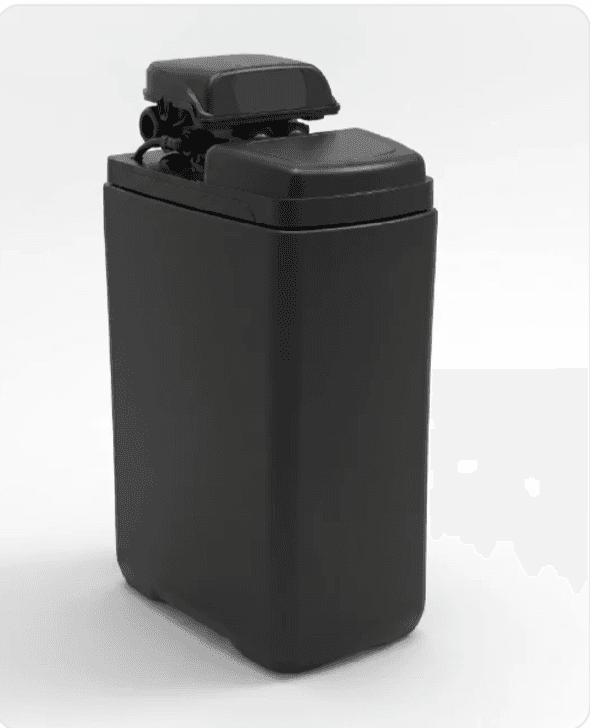
Compact, efficient softening for larger homes and small commercial sites: up to 3 m3 per hour with up-flow…
View product →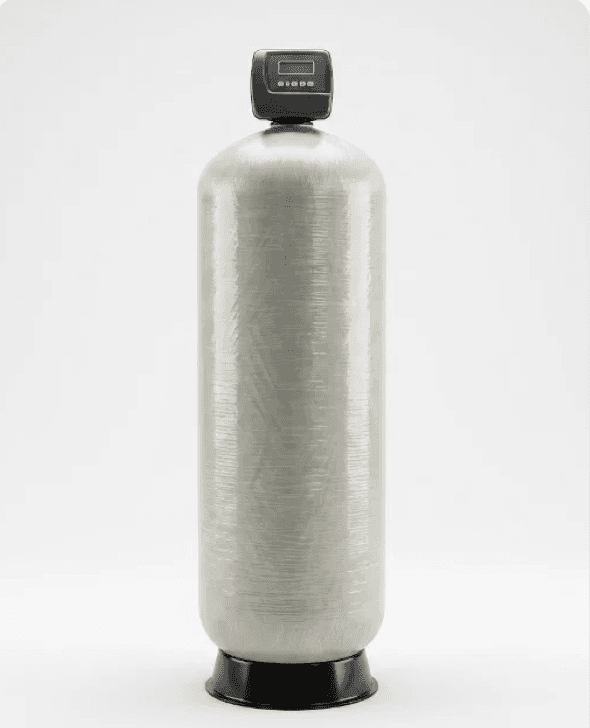
A single 30 x 72 inch auto-backwash depth filter on a metered CE 1.5 inch control valve, carrying 367.9 litres…
View product →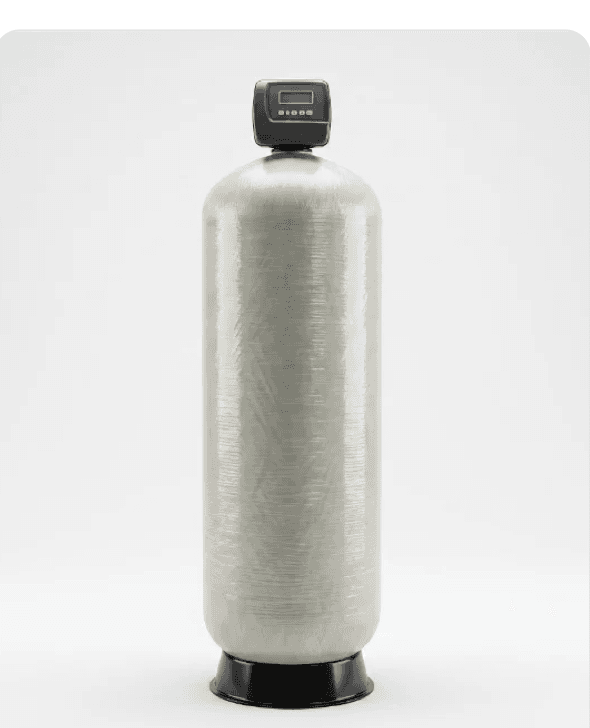
A single 30 x 72 inch activated carbon filter on a metered CE 1.5 inch control valve, holding a 180 kg Centaur bed…
View product →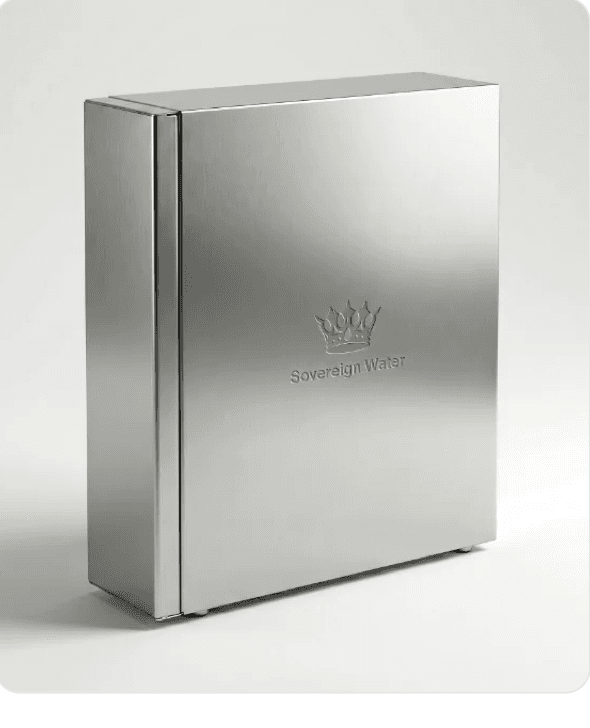
High-flow commercial reverse osmosis for high-volume food & beverage: up to 185 litres of crystal-clear purified…
View product →