
Water delivery in Kuwait is part of office life. A van brings 19-litre bottles to the building, someone signs for them, and they sit in a corner until the cooler runs dry. It works, but it is not the only way. A mains-fed cooler connects to your building's water supply and treats the water inside the unit, so the deliveries stop. This guide sets out what you really pay for with water delivery in Kuwait, what changes with mains-fed, and how to judge which one suits your office, clinic or showroom.
TL;DR
- With water delivery, you pay for every bottle and for the work around it: ordering, receiving, lifting and storing.
- With mains-fed, the ongoing cost is filter changes and servicing, which do not rise as people drink more.
- The treatment inside a mains-fed unit should be chosen for your building's supply and storage tank.
- In summer heat, where bottles are kept before use matters.
- Delivery still suits short leases, site cabins and rooms with no water point.
Want to know if mains-fed suits your building? Talk to Our Team.
In this article
- What water delivery in Kuwait really involves
- What changes with a mains-fed cooler
- Your building's supply and tank
- Choosing a mains-fed cooler for each room
- Storage, heat and hygiene
- How to compare the two for your office
- What happens when you switch
- Getting through a Kuwaiti summer
- Questions to ask a supplier
- When delivery is still the better choice
- Frequently asked questions
What water delivery in Kuwait really involves
Bottled water delivery is simple to start, which is why so many offices use it. The full cost is spread across several places, and most of it is not on the delivery note.
| What you pay for | Where it shows up |
|---|---|
| Bottles | Every bottle is charged, so the bill follows how much your team drinks |
| Delivery and deposits | Often added per drop or per bottle |
| Cooler rental | Sometimes charged on top |
| Floor space | Full bottles waiting to be used, empties waiting to go back |
| Staff time | Checking stock, calling the supplier, receiving the van |
| Lifting | A full 19-litre bottle weighs about 19 kg |
| Running out | Staff go without when stock ends before the next drop |
None of these is large on its own. Together, and every week of the year, they add up. Our guide to how much a water cooler costs to run in Kuwait lists the running costs behind each type of cooler.
What changes with a mains-fed cooler
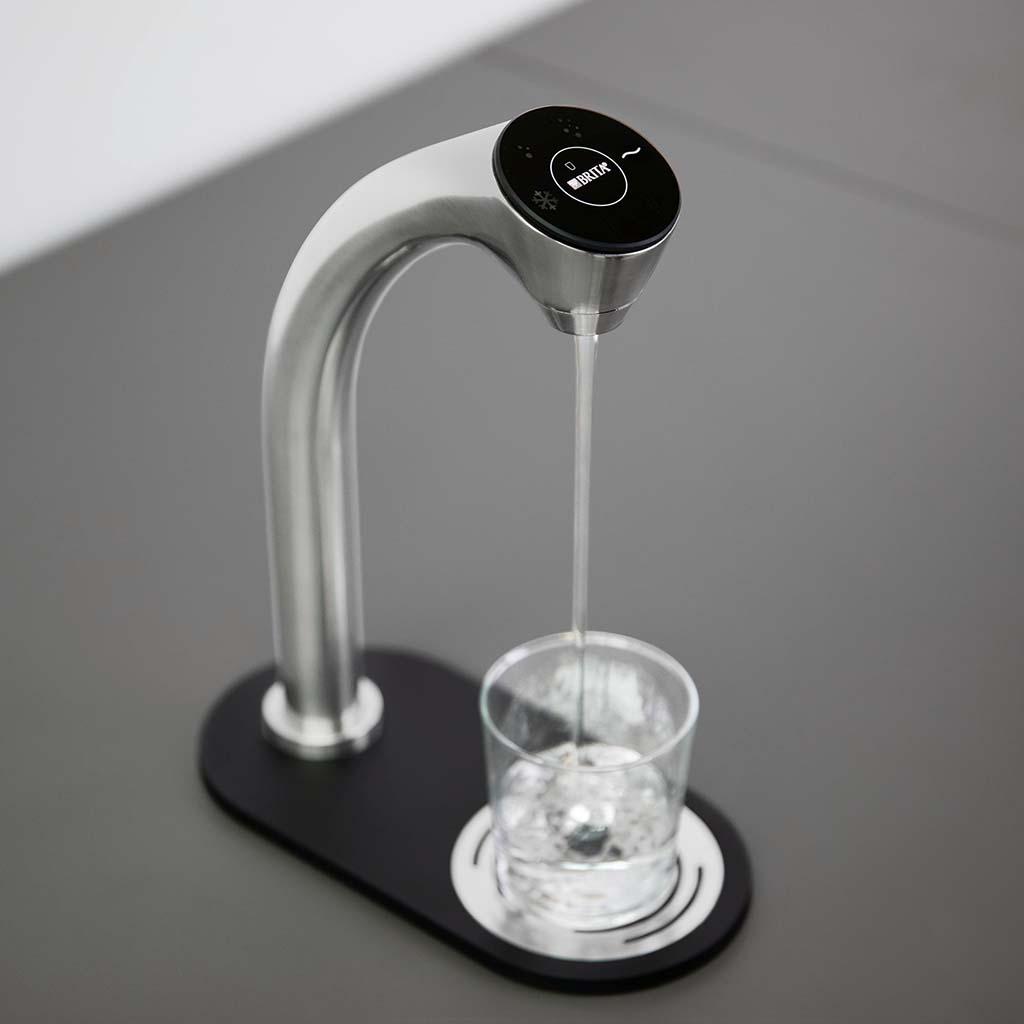
A mains-fed cooler is plumbed into your cold water line. Water passes through filtration and any extra treatment your supply needs, then comes out chilled, at room temperature, sparkling or boiling, depending on the model.
The cost moves from the bottle to the machine. You pay more at the start for the unit and the installation. After that, you pay for filter changes and planned servicing at fixed intervals. Hire five more staff, or go through a hot summer, and that cost stays the same. There is no stock to order and no van to wait for.
For contract and rental options, see our water cooler rental cost guide for Kuwait.
Your building's supply and tank
Kuwait's drinking water network is run by the Ministry of Electricity, Water and Renewable Energy, which publishes its production figures in a Statistical Monthly Book. Most commercial buildings also store water in roof or ground tanks before it reaches the taps.
That tank is part of your drinking water system. A mains-fed cooler treats the water at the point of use, but the tank should still be cleaned on its own schedule. The right filter or treatment depends on the building, which is why a site survey (a paid visit) comes before any recommendation.
Want a mains-fed option planned for your building? Request a Quote.
Choosing a mains-fed cooler for each room
The right unit depends on the room. This is how formats usually line up in Kuwaiti offices and showrooms.
| Room | Option to consider | Check first |
|---|---|---|
| Pantry or kitchen | Worktop tap with an under-counter unit for chilled, sparkling or boiling water | Room under the counter |
| Office floor | Floor-standing mains-fed cooler | Distance to the nearest cold pipe |
| Reception or guest area | Compact countertop unit | A neat look for visitors |
| Showroom | Small cooler in the staff area | Kept out of the customer route |
| Clinic waiting area | Compact dispenser | Within easy reach for patients |
| Workshop or store | Bottle filler or sturdy floor unit | Dust and heavy use |
Most offices need one or two of these formats, not all six. The survey shows which ones make sense for your layout.
Storage, heat and hygiene
With water delivery, each bottle passes through a warehouse, a vehicle and then your building before it is used. Bottles left in a hot entrance, a car park store or near a window in summer are harder to keep in good condition. Every bottle change also opens the water path to the room, and the cooler's reservoir needs regular cleaning.
A mains-fed cooler has no bottle to change, so the water path stays closed. It still needs care. Filters must be changed on time and the unit sanitised at each visit, which is why we pair every installation with planned maintenance.
How to compare the two for your office
Rather than relying on a sales estimate, look at your own figures.
| Step | What to do |
|---|---|
| 1 | Add up last year's water delivery invoices, including deposits and any cooler rental. |
| 2 | Ask for a written yearly cost for a mains-fed unit's filters and servicing. |
| 3 | Subtract step 2 from step 1 to find your yearly difference. |
| 4 | Divide the unit and installation cost by that difference to see how many years it takes to pay back. |
Our commercial drinking water calculator gives a quick first view. To choose a format, read our office water dispenser guide for Kuwait or the best office water dispensers in Kuwait.
What happens when you switch
Leaving water delivery behind takes a little planning, mostly around timing.
| Step | What happens |
|---|---|
| 1 | A site survey (a paid visit) checks the supply, the building tank, power and the pipework route. |
| 2 | You get a written proposal for the unit, the fitting and the yearly service plan. |
| 3 | The landlord or building management agrees the work and the timing. |
| 4 | The cooler is fitted, flushed and sanitised before use. |
| 5 | You give notice to your delivery company, hand back the empties and recover any bottle deposits under your contract. |
| 6 | Planned visits keep filters and sanitising on track. |
Aim to have the new cooler fitted before the last delivery runs out, so your team is never left without water during the changeover.
Getting through a Kuwaiti summer
In the peak summer months people drink more. With delivery, that means extra bottles, extra drops and more stock to store, often in an entrance or store room that gets very warm.
A mains-fed cooler draws what it needs from the pipe, so there is no extra stock to manage. To keep the water cold on peak days, place the unit away from direct sun and windows, leave space around its vents, and ask the supplier what chilled output it gives per hour.
Questions to ask a supplier
| Question | Why it matters |
|---|---|
| Is the filter chosen for our building's supply and tank? | Each building is different |
| How often are filters changed and the cooler sanitised? | Skipped visits undo the hygiene gain |
| Who carries out the service, and how fast is a call-out? | You need a clear contact when something goes wrong |
| What is the minimum term and notice period? | So the contract fits your lease |
| Who owns the cooler at the end? | Rental and purchase end in different ways |
When delivery is still the better choice
| Situation | Why delivery can win |
|---|---|
| Short lease | Nothing to remove when you move out |
| Site cabin or temporary space | Bottles move with the team |
| No water point within reach | New pipework may not be worth it |
| Very few users | A handful of bottles a month may never repay a fitted unit |
Many businesses use both: mains-fed in the main pantry, bottles in a far store or site office. Moving away from delivery also cuts plastic and van trips, which fits the wider aims of New Kuwait 2035. Our guide to cutting plastic waste in Kuwait offices has more ideas, and our commercial solutions page shows how we plan larger sites.
Frequently asked questions
Is water delivery in Kuwait cheaper than a mains-fed cooler?
Delivery is cheaper to start. For an office with steady daily use, paying for every bottle usually costs more over a few years than a mains-fed unit's fixed filter and service costs.
Does a mains-fed cooler work with a building water tank?
Yes. The treatment is chosen to suit the supply, and the tank should still be cleaned regularly.
How often is a mains-fed cooler serviced?
Filters are usually changed every six to twelve months, depending on use and the supply. Each visit should include a sanitise of the unit.
Can we keep one bottled cooler and switch the rest?
Yes. Many offices keep a bottled cooler in a room without a water point and use mains-fed everywhere else.
Ready to stop waiting for the van?
Sovereign Water supplies, installs and maintains BRITA and RoyalFlow mains-fed coolers for businesses across Kuwait. Tell us how many people you have and how much you order now, and we will show you how mains-fed compares. Get in Touch
Sources
- Ministry of Electricity, Water and Renewable Energy, official website, checked 15 October 2026.
- Ministry of Electricity, Water and Renewable Energy, Statistical Monthly Book, June 2025 (PDF).
- New Kuwait 2035, official website, checked 15 October 2026.