
Water dispensers for schools and colleges in Kuwait need to deliver reliable, appealing drinking water through hot conditions, short periods of intense demand and long academic days. The right system is not simply the model with the largest headline output. It is the one that matches the campus water route, peak timetable, user group, available services and maintenance plan.
TL;DR
- Size provision around the busiest break, lunch changeover and sports period, not average daily use.
- Put pupil-facing points in visible, supervised areas without blocking corridors, stairs, doors or escape routes.
- Treat bottle filling as a core requirement where reusable bottles are part of school life.
- Check approach space, reach, control force, bottle support and visual clarity for accessibility.
- Trace the building water route. In Kuwait, tanks and internal distribution arrangements are important site-specific checks, not reasons to assume every campus has the same water quality.
- Confirm pressure, flow, power, drainage and ventilation at each proposed location.
- Use carbon filtration where chlorine-related taste or odour is the issue. Specify scale control only after a water test and equipment review indicate a need.
- Keep boiling-water functions away from open pupil areas and within appropriately controlled staff or college settings.
- Plan routine cleaning, filter changes, sanitisation and recommissioning after holidays before installation.
Contents
- Why Kuwait schools need a site-specific plan
- Start with peak demand
- Compare dispenser formats
- Supervision, placement and accessibility
- Water, power, drainage and ventilation
- Environmental goals and water quality
- Four products for education settings
- Maintenance and holiday recommissioning
- Pre-installation checklist
- Frequently asked questions
- Talk to the Kuwait team
Why Kuwait schools need a site-specific plan
Kuwait's hot climate changes the practical brief. Sports lessons, assemblies and dismissal can concentrate demand into a few minutes. A dispenser that performs adequately in a staff room may recover too slowly beside a gym or main corridor. Assess chilled output, recovery and ventilation under realistic local conditions.
The wider policy context supports dependable school water access. Kuwait's 2019 Voluntary National Review says access to clean drinking water and hygienic wastewater networks is near universal nationally and discusses the country's work towards Sustainable Development Goal 6. A Kuwait Government Online statement also highlights clean drinking water, sanitation and hygiene as part of safe school environments. UNICEF defines a basic school drinking-water service as an improved source with water available at the time of the survey.
These sources establish the importance of water access, but our review did not find a Kuwait regulation written specifically for school water dispensers. Schools, colleges and project teams should not treat this guide as a substitute for requirements issued by the Ministry of Education, Ministry of Health, municipality, fire authority, building owner or the institution's own safeguarding and facilities policies. Confirm the rules that apply to the particular project before approval.
Start with peak demand
Education sites use water in waves. Count likely users during the busiest ten or fifteen minutes at morning break, lunch and lesson changeovers. Add demand after physical education, outdoor sport, clubs, events and evening classes. On a college campus, also consider staggered timetables and buildings that remain open beyond the standard teaching day.
Observe what users bring. A tall sports bottle needs enough clearance and a stable rest, while younger pupils may use small bottles or cups. A fast outlet is of little value if bottles sit awkwardly or splashing makes the floor slippery. Bottle fillers can also reduce mouth contact with the outlet compared with a traditional bubbler.
For larger campuses, several well-positioned stations often work better than one central unit. Distribution reduces walking time and queues, and it preserves some access when a unit is being cleaned or serviced. Map demand by building, floor and timetable. Then review flow, pressure, chilled-water recovery and simultaneous use against confirmed product data.
Avoid converting a daily headcount directly into a dispenser quantity. Two schools with the same enrolment can have very different needs if one has a compact building and staggered breaks while the other has separate blocks, a large sports programme and one common lunch period.
Compare dispenser formats
| Format | Likely education setting | Main strengths | Checks before selection |
|---|---|---|---|
| High-capacity hydration station | Main routes, dining areas, sports facilities and sheltered activity zones | Robust bottle filling for repeated public use | Peak recovery, queue space, supervision, mounting, drainage and exposure to heat |
| Countertop mains-fed dispenser | Staff rooms, sixth-form rooms and managed college spaces | Compact format with familiar controls | Worktop depth, bottle clearance, power, ventilation and access for servicing |
| Floor-standing mains-fed dispenser | Reception, administration and supervised common rooms | Flexible placement without using a worktop | Stability, floor area, drip management, power and circulation space |
| Integrated smart tap | Staff kitchens, meeting rooms and controlled college hospitality areas | Multiple water options from a tidy point-of-use installation | Under-counter space, drainage, ventilation, controls and hot-water risk |
| Ambient bottle-filling point | Locations where chilled water is unnecessary or impractical | Simpler duty and lower cooling demand | Seasonal water temperature, user acceptance, flow and drainage |
Pupil hydration and staff refreshment should be treated as separate use cases. Open pupil areas usually call for simple cold or ambient bottle filling, robust construction and intuitive controls. Staff kitchens may justify boiling, sparkling or other options. A broader feature list is not automatically a better specification.
Supervision, placement and accessibility
A dispenser becomes part of the campus movement plan. Position pupil-facing equipment where staff have reasonable sightlines and can notice misuse, spills or a fault. Do not place a popular station where its queue would narrow an escape route, obstruct classroom doors, gather beside stairs or interfere with security at an entrance.
Controls should be simple, surfaces easy to clean and service connections inaccessible to pupils. Enclose pipework, filters, electrical connections and gas cylinders where applicable. Check dispense height and operating force for younger users, and consider unsupervised use by older pupils and college students.
Accessibility is more than a nominal mounting height. Review the complete approach route, clear floor area, turning space, reach range, control force, visual contrast and instructions. A bottle should have stable support so that a wheelchair user or somebody with limited grip does not need to hold it in mid-air. Include disabled pupils, students and staff in the assessment where possible, and obtain specialist advice when required.
Noise matters too. Compressors, pumps and bottle impact can disturb libraries, learning-support rooms, studios and examination spaces. A supervised recess a little farther away may work better than a machine fitted against a quiet teaching wall.
Water, power, drainage and ventilation
Begin the site survey by tracing the drinking-water route, not just finding the nearest pipe. Confirm the source serving the proposed point, the location and condition of any ground or roof tank, the internal distribution route, available isolation and whether other treatment already sits upstream. Building tanks are common enough in Kuwait to demand attention, but each site must be inspected rather than assumed to have the same arrangement.
Measure pressure and flow at the proposed connection during representative operating conditions. A reading elsewhere in the building may conceal pressure losses, pump behaviour or competing demand. The layout should avoid unnecessary stagnant sections and allow the dispenser and filter to be isolated and serviced safely.
Chilled dispensers and electronic taps need a suitable electrical supply. Check socket position, circuit capacity, cable protection and shutdown arrangements. Extension leads across public routes or wet worktops are not an acceptable design solution. Refrigerated equipment and under-counter modules also need the clearances and airflow stated by the manufacturer. Poor ventilation can reduce cooling performance, especially in warm service cupboards.
Drainage varies by product. Some systems connect to a trapped waste, while others collect drips in a tray that staff must empty. A small tray can become an operational burden during a busy break. Where a plumbed waste is proposed, confirm route, fall, trap, air gap where required and cleaning access. Where no drain is available, assign responsibility for checking and emptying the tray.
Environmental goals and water quality
Mains-fed bottle filling can reduce purchases, storage and movement of single-use water bottles. Measure results through purchasing and waste records rather than an unsupported headline statistic. Provide for pupils who forget or cannot use a bottle so that plastic reduction does not restrict water access.
Kuwait's national sustainability report treats clean water, efficient water use and responsible consumption as connected development priorities. At site level, that means specifying only the treatment needed, preventing leaks and maintaining equipment so it remains useful for its intended life.
Carbon filtration is a practical point-of-use option where the objective is to reduce chlorine-related taste and odour that may discourage drinking. Cartridge selection and replacement frequency must match test results, actual throughput and manufacturer instructions. Carbon does not correct every possible water-quality issue, and it does not compensate for an unsuitable tank, contaminated pipework or poor cleaning.
Hardness and scale are separate questions. Kuwait buildings can receive water through different storage and distribution arrangements, so scale control should not be included automatically. Test the water at the relevant outlet and review the dispenser's internal heating or chilling components. Add suitable scale management only where the result and equipment requirements justify it. The Kuwait commercial water-treatment overview explains this site-led approach.
Four products for education settings
Crown Spring
The Crown Spring Hydration Station is the strongest starting point in this group for a busy student route, dining zone or sports facility. Its freestanding stainless-steel format, recessed bottle-filling area and chilled and ambient options suit repeated public use where straightforward hydration is the priority.
Assess it as part of the campus flow plan. Confirm peak chilled recovery, approach space, drainage, supervision and whether users of different heights can position bottles comfortably. If it is considered for a sheltered external area, verify the permitted installation environment and account for Kuwait heat, dust and direct sun rather than assuming outdoor suitability in every location.
CrownFlow CA
CrownFlow CA is a compact chilled-and-ambient choice for a managed staff room, sixth-form area or college common space. It can provide filtered drinking water where a large public hydration station would be disproportionate and where countertop or floor-standing installation fits the room.
Check bottle clearance, worktop or base stability, nearby power, ventilation, drip handling and filter access. Its capacity should still be tested against the busiest break. Compact dimensions do not remove the need to allow service clearance or reject heat from the cooling system.
RoyalFlow BCS Smart Tap
The RoyalFlow smart-tap range can suit controlled staff kitchens, meeting suites and selected college refreshment points where an integrated tap is preferred. The BCS configuration brings boiling, chilled and sparkling functions together, subject to the selected specification and supporting under-counter services.
Boiling water should not be presented as an open pupil hydration point. Keep this format within a controlled setting after a documented risk assessment, with appropriate user controls, supervision and signage. For general pupil bottle filling, a dedicated cold-water station is usually a clearer and safer brief.
BRITA Top Pro
BRITA Top Pro is a mains-fed option for staff rooms, administration areas and supervised college common spaces. It offers a single dispense point for filtered ambient, chilled and sparkling water options, making it relevant where users need more choice than a basic bottle-filling station.
Review the chosen countertop or floor-standing arrangement, bottle clearance, ventilation, drip management and expected throughput. In a high-traffic pupil corridor, compare it carefully with the more public-space-oriented Crown Spring rather than selecting on water options alone.
Maintenance and holiday recommissioning
Assign ownership before use. Routine tasks include wiping controls, cleaning the dispense area, checking for leaks and removing standing water. Define how often drip trays are inspected and emptied. Follow product instructions and avoid abrasive or strongly scented cleaners near the outlet.
Planned service may include sanitisation, cartridge replacement, scale treatment where specified, refrigeration checks and inspection of hoses, fittings, drains and electrical components. Intervals depend on water quality, usage and manufacturer requirements. Record each unit's location, model, installation date, filter changes, sanitisation, test results and faults. The Kuwait maintenance page describes planned servicing and digital service records.
School holidays need an explicit plan. Low or zero use can leave water standing in the dispenser and connecting pipework. Follow manufacturer instructions for shutdown, flushing, cleaning, sanitisation, filter assessment and restart. Complete recommissioning early enough to resolve faults before pupils return, and record who carried it out and when.
Pre-installation checklist
- Record pupil, student and staff numbers for each proposed point.
- Measure demand during the busiest break, lunch and sports changeover.
- Decide whether each location serves bottles, cups or both.
- Map queues against doors, stairs, corridors and escape routes.
- Confirm sightlines, supervision and tamper resistance.
- Check accessible approach, reach, controls, bottle support and instructions.
- Trace the water route, including any tanks and existing treatment.
- Measure pressure and flow at the proposed connection.
- Test site water before selecting filtration or conditional scale control.
- Confirm power, drainage, ventilation and safe isolation.
- Keep boiling-water functions within suitable controlled areas.
- Agree cleaning, filter replacement, sanitisation and record ownership.
- Plan holiday shutdown and recommissioning.
- Verify current product data, installation conditions and service access.
Frequently asked questions
How many water dispensers does a Kuwait school need?
There is no dependable universal ratio. Use enrolment, campus layout, travel distance and the busiest ten or fifteen minutes of demand. Several distributed points may give better access and resilience than one large central dispenser.
Should schools choose chilled or ambient water?
Chilled water can be attractive in Kuwait's hot conditions, but the unit must have adequate peak recovery and ventilation. Ambient water may suit quieter areas or simpler installations. Test user expectations and assess power, location and maintenance before deciding.
Do building tanks mean a school needs extra treatment?
Not automatically. Trace and inspect the site's actual water route, including tank condition and maintenance, then test at a relevant outlet. Select treatment in response to evidence rather than assuming every Kuwait building has the same issue.
Is carbon filtration enough?
Carbon is useful for reducing chlorine-related taste and odour, but it does not address every water-quality concern. Filter selection should follow the site assessment, water test, desired outcome and product requirements.
When should scale control be added?
Only after a water test and equipment review indicate a need. Hardness can affect internal heating and chilling components, but automatic treatment without evidence can add unnecessary maintenance.
Does every dispenser need drainage?
No. Some have removable drip trays, while others require a waste connection. High-use locations can overwhelm a small tray, so confirm the arrangement and daily responsibility before ordering.
Can pupils use a boiling-water dispenser?
A boiling-water function should not be specified as an open pupil hydration point. Restrict it to an appropriate controlled staff or college area with a documented risk assessment, suitable controls and supervision.
What should happen after a long school holiday?
Follow the manufacturer's recommissioning procedure. This may include flushing, cleaning, sanitisation, filter review and operational checks. Finish and record the work before normal occupancy resumes.
Talk to the Kuwait team
A useful specification starts with the users, the timetable, the building water route and the services available at each proposed point. Talk to the Kuwait team about your site to review those requirements and identify suitable next steps.
Sources
- Kuwait Government Online: statement on clean drinking water, sanitation and hygiene in schools
- General Secretariat of the Supreme Council for Planning and Development: Kuwait Voluntary National Review 2019
- UNICEF Data: WASH in schools
- Sovereign Water Kuwait: product range
- Sovereign Water Kuwait: commercial water treatment
- Sovereign Water Kuwait: maintenance
Products mentioned in this article
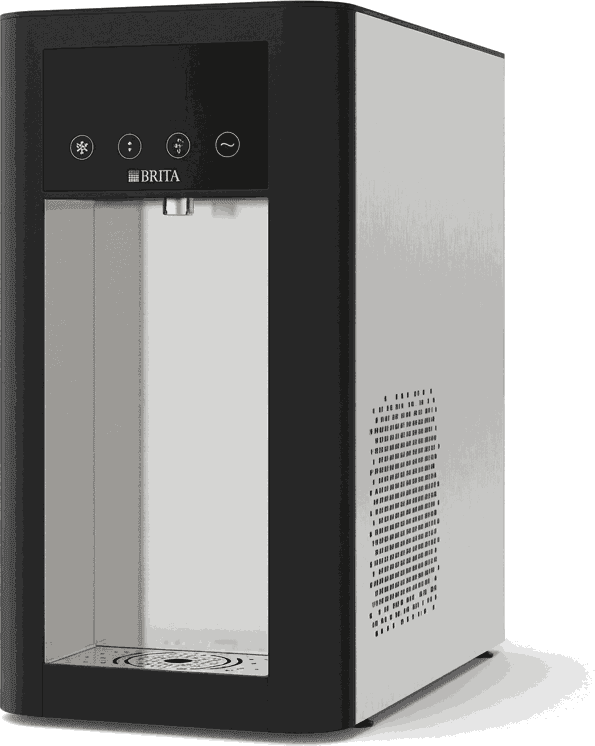
A single mains-fed dispense point for chilled still, sparkling, semi-sparkling and ambient water, engineered…
View product →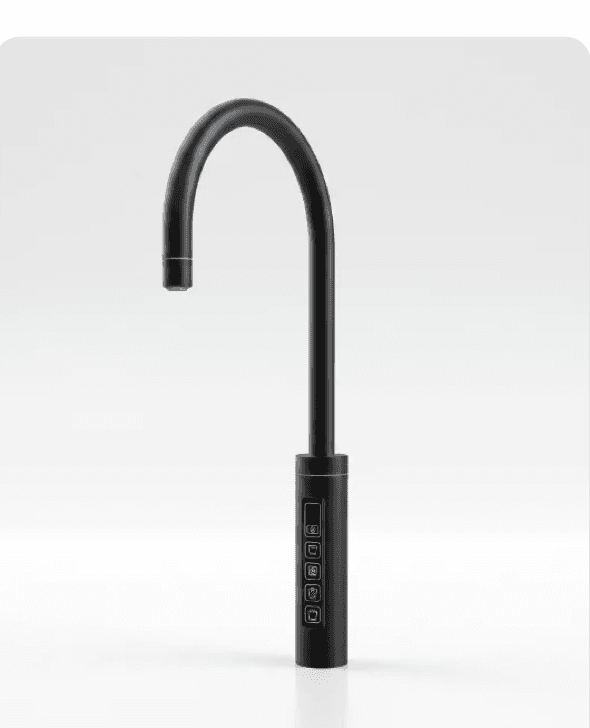
A high-performance, commercial-grade tap delivering instant boiling, chilled and sparkling water with reliability…
View product →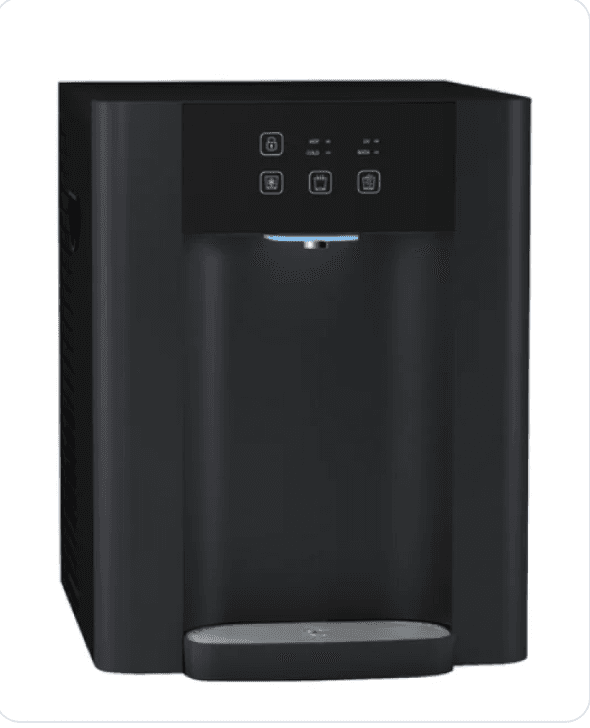
A sleek, compact countertop dispenser delivering instant chilled and ambient filtered water with commercial-grade…
View product →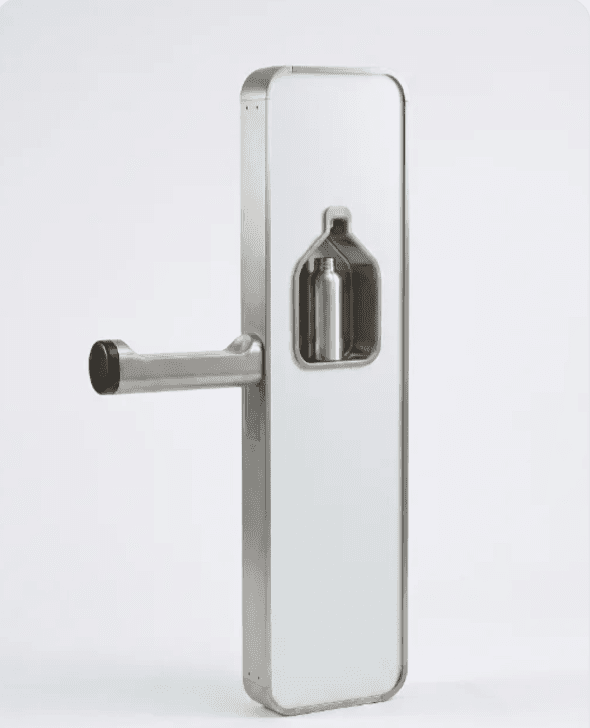
A premium freestanding station serving chilled and ambient filtered water with a recessed bottle-fill alcove, robust…
View product →