
Choosing the right water softener for a Kuwait business starts with understanding what the water actually contains, because the State's desalinated supply, buffered through building storage tanks in extreme heat, carries a mineral load that hard water softeners exist to solve. This guide is written for businesses across Kuwait City and beyond: what hard water does to commercial equipment, how water softening works, when it is the right answer, and how to choose a softener and a supplier that protect your operation for the long term.
If you would rather have a specialist assess your specific site than read a general guide, you can get in touch at any time.
TL;DR
- Kuwait's supply is almost entirely desalinated and buffered through storage tanks, giving it a mineral load that causes scale in commercial equipment.
- Hard water forms scale on heating elements, blocks fine waterways and raises energy use across boilers, coffee machines, steamers and dishwashers.
- A water softener exchanges calcium and magnesium for sodium, protecting whole-building hot water and heating plant from scale.
- Softening suits buildings and hot water plant; point-of-use filtration or reverse osmosis suits beverage and catering equipment. Many projects need both.
- Choosing a supplier is about correct specification, total cost of ownership and ongoing maintenance.
- Sovereign Water supplies, installs and maintains commercial water softeners and wider treatment systems across Kuwait.
Why a Water Softener Matters in Kuwait
Kuwait's water supply is almost entirely desalinated, delivered through Ministry of Electricity, Water and Renewable Energy infrastructure. Desalination produces potable water that is, if anything, on the lower side of mineral content at the plant. But the water that reaches a business is not the same as the water leaving the plant: it travels through the distribution network and through building storage tanks, where it sits in extreme heat and can pick up sediment and variability.
When that water is heated in commercial equipment, hardness minerals come out of solution and deposit as scale. In a building that runs boilers, calorifiers, steamers, dishwashers, coffee machines and ice machines, that process runs all day. A water softener exchanges the calcium and magnesium before they reach the equipment, preventing scale from forming in the first place. For whole-building hot water and heating plant, it is the foundation of commercial water treatment.
How Scale Damages Your Equipment
Hard water damage shows up in a few distinct ways, and understanding them explains why softening is worth doing before equipment fails.
Scale insulates heating elements. In a boiler, combination oven, steamer or coffee machine, scale coats the heating surface and acts as an insulator. The element works harder, uses more energy and fails early from thermal stress. An element that should last years can degrade in months on untreated hard water.
Scale blocks fine waterways. Beverage and specialist equipment has fine internal pipes and valve channels that scale gradually blocks, reducing flow and consistency. Coffee machines are particularly exposed, and hardness also flattens flavour.
The cost compounds. Every litre of hard water carries dissolved mineral, and the damage is gradual. Equipment appears to fail "for no reason" when the real cause is the water running through it. The cost is spread across energy, repairs and premature replacement, so it rarely appears as a single line.
Is Your Kuwait Water Safe to Drink?
Yes. Public supplies are treated and potable, and hardness has no adverse health effect. The issue for businesses is suitability, not safety: water that is perfectly fine to drink can still be entirely wrong for a steam oven, a heating circuit or an espresso machine. Protecting equipment from scale is a separate job from ensuring water is safe to drink, and softening is about the equipment.
How a Water Softener Works
A water softener works by ion exchange. Hard water passes through a vessel containing resin beads pre-loaded with sodium ions. As the water flows through, the resin exchanges its sodium for the calcium and magnesium in the water. The result is softened water with the hardness minerals removed, so it no longer deposits scale when heated.
TREATMENT: Softening, Filtration or Reverse Osmosis?
Softening protects whole buildings and hot water plant. But not every piece of equipment needs softening, and some applications need something different.
Water softeners suit buildings and hot water plant where scale protection across the whole system is the priority.
Scale-inhibiting filtration treats water at the point of use and is the standard for espresso machines, bean-to-cup machines and dispensers, conditioning the water while keeping the mineral character beverages need.
Reverse osmosis (RO) removes the vast majority of dissolved solids and suits applications with tight water specifications, such as combination ovens, steamers and speciality coffee, usually with controlled remineralisation or blending.
Choosing a Water Treatment Partner in Kuwait
The supplier matters as much as the equipment. There are four things worth testing any provider on.
They specify for your site. A specification built around your supply and usage is the difference between a system sized to your site and a generic one. If a supplier quotes without understanding your site, treat that as a warning sign.
They match the technology to the application. Softening, filtration and reverse osmosis solve different problems. A credible partner explains which you need and why, rather than pushing a single product.
They quote total cost of ownership, not just the box. The softener itself is only part of the cost; so are salt, servicing, downtime and the equipment it protects. The cheapest installation is rarely the cheapest over five years.
They take responsibility after installation. Servicing, salt management, cartridge changes and fast response when something fails are where value is delivered.
Compliance and Maintenance in Kuwait
Commercial water systems in Kuwait carry obligations that are easy to overlook. Food and beverage operators answer to municipal food-safety expectations for water used in food production, and health inspections verify that facilities maintain appropriate water treatment and monitoring. A documented treatment programme, with testing records and maintenance logs, demonstrates a facility is managing water quality rather than assuming it.
Maintenance is where water treatment is actually managed over time. Softeners need periodic salt top-ups and checks, and any filtration in the system needs cartridges changed on a schedule that matches real usage and water quality. In demanding Kuwaiti conditions, cartridges may need changing more often than the manufacturer's standard interval. A proactive maintenance programme keeps the whole system protecting your equipment.
Frequently Asked Questions
Do I need a water softener or just a filter for my business?
It depends on the application. Softeners protect whole buildings and hot water plant, while point-of-use filtration or reverse osmosis suits coffee machines, ovens and dispensers. Many commercial sites need both. A site survey is the reliable way to specify the right combination.
Does softened water affect the taste of food or coffee?
Softened water can be appropriate for whole-building hot water, but for coffee and beverages many operators prefer point-of-use filtration that preserves a controlled mineral balance for extraction. The right approach depends on what the water is for.
How often does a water softener need maintenance?
Softeners need periodic salt top-ups and checks to keep regenerating properly. Any filtration in the system needs cartridges changed on a schedule that matches usage and water quality. A maintenance programme schedules these so protection never lapses.
What happens if I don't treat my water in Kuwait?
Without treatment, scale builds on heating elements and blocks waterways across your equipment. The damage is gradual, so it is easy to miss until equipment fails. Expect reduced efficiency within months, rising maintenance costs within a year and premature replacement within a few years. The cumulative cost exceeds the cost of prevention.
Is hard water in Kuwait a health problem?
No. Hardness has no recognised health risk. The costs of hard water fall on equipment, energy bills and beverage quality rather than on health.
Protect Your Kuwait Operation From Scale
Sovereign Water supplies, installs and maintains commercial water softeners and wider treatment systems across Kuwait, from protecting a building's hot water and heating plant to point-of-use treatment for beverage equipment. We specify the right treatment for your supply and your operation and maintain the system over its lifetime.
Sources
Products mentioned in this article
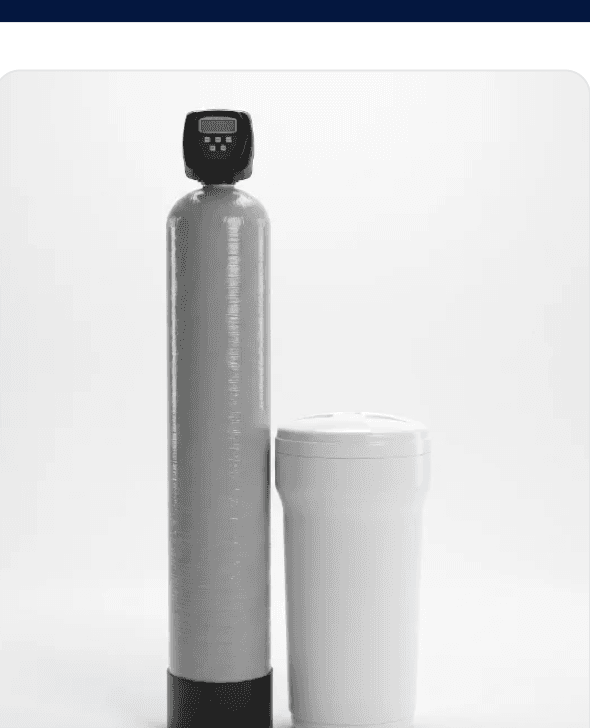
A high-capacity, professional-grade water softener for demanding residential, commercial and light-industrial use…
View product →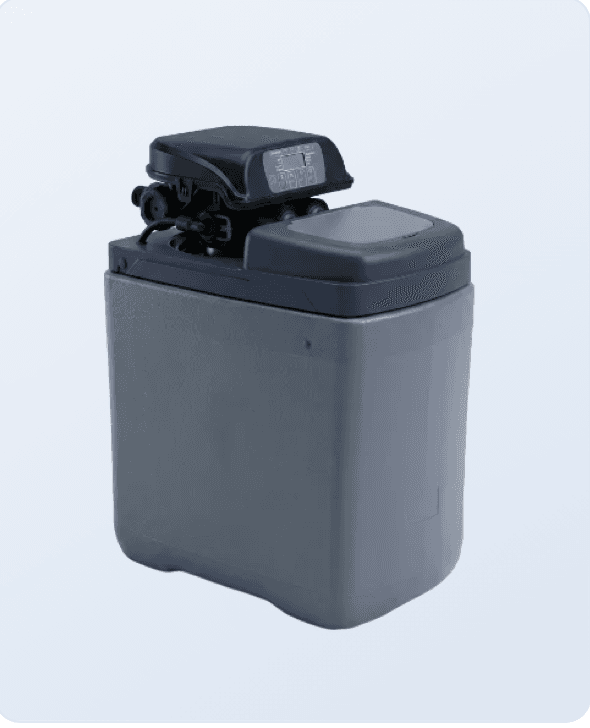
The smallest Regal: an ultra-compact cabinet water softener built around the reliable US-made Clack DV valve…
View product →
A stainless-steel point-of-entry UV steriliser for large residences and light commercial sites: villas, boutique…
View product →