
Commercial water softeners in Kuwait should be specified from measured water quality at the inlet, demand and site conditions. A desalination source or TDS reading cannot establish capacity. This guide supports a brief but does not replace sampling, a site survey or approval.
TL;DR
- Test total hardness at the actual inlet after the site's storage, pumps and relevant pipework, while recording TDS separately.
- Size for daily hardness load, short peak and sustained flow, dynamic pressure, pressure loss and a realistic regeneration window.
- Decide whether a single unit can regenerate during a genuine low-demand period or whether alternating duty is needed for continuity.
- Protect equipment, salt and controls from Kuwait's heat and dust, and plan a safe salt route, covered storage, drainage and overflow.
- Obtain the building operator's and relevant project or Kuwait authority's approval for the complete installation, not just the selected product.
Contents
- What softening changes, and what it does not
- Where commercial softening may help in Kuwait
- Specification inputs for a Kuwait site
- Worked hardness-load and sizing logic
- Single vessel or alternating twin duty
- Installation, drainage and local approval
- Drinking water, cooking branches and sodium
- Product examples
- Commissioning and handover
- Maintenance in a hot, dusty climate
- Procurement checklist
- Application-led comparison
- Frequently asked questions
- Sources
What softening changes, and what it does not
Hardness is mainly associated with dissolved calcium and magnesium. An ion-exchange softener exchanges those ions for sodium. Brine regenerates the resin, with regeneration water sent to a suitable drain, leaving less hardness available to form scale.
Softening is not general purification. It does not demonstrate microbiological safety, remove every dissolved substance or guarantee appliance suitability. TDS or conductivity is not hardness and cannot replace a total-hardness result, normally expressed as mg/l CaCO3.
Kuwait relies heavily on desalination for freshwater supply, followed by public distribution and storage. At a property, water may pass through a ground reservoir or roof tank, booster pumps, pipework and existing treatment. Sample at the actual softener inlet under representative operating conditions, not from a source assumption or country-wide figure.
Define the treatment objective before selecting equipment. Protecting a calorifier, laundry line or warewashing branch can require a different arrangement from treating all services. Review the commercial water-treatment options before assuming that whole-building softening is appropriate.
Where commercial softening may help in Kuwait
Hotels and resorts may need scale control for hot-water services, kitchens, glasswashers and laundries. Occupancy, meal periods and linen cycles create peaks that an average daily figure can hide.
Restaurants and catering facilities should identify scale-sensitive appliances and check each manufacturer's inlet-water requirements. Dishwashers, steam equipment and beverage systems can have different limits.
Commercial laundries need volume and sustained-flow evidence because batch sequencing may create long demand periods. Plan salt handling and decide whether regeneration can occur outside wash cycles.
Healthcare facilities need a clear boundary between general building protection and specialist or clinical uses, which require separate assessment. Managed and mixed-use properties should map central hot water, tenant beverage outlets and variable occupancy.
Compare measured hardness, service history and equipment limits. Visible scale supports an investigation but cannot size a softener.
Specification inputs for a Kuwait site
Water route and analysis. Trace the municipal connection, reservoir or site tanks, pumps, filters and final inlet. Record the sampling point, date and operating state. Test total hardness, with TDS or conductivity recorded separately. Add analysis needed for pretreatment or material compatibility.
Volume and demand. Meter typical and busiest days. Separate kitchens, laundries, hot-water makeup and other treated branches where possible. Note occupancy, shifts and planned expansion.
Hydraulic duty. Record short peak and sustained flow. Measure static and minimum dynamic pressure near the connection, and obtain pressure-loss data at design flow. Adequate exchange capacity does not prevent excessive restriction.
Regeneration and continuity. Establish the regeneration window and whether hard-water bypass or interruption is acceptable. Identify critical services and the consequence of treatment being unavailable.
Plant space. Confirm footprint, loaded weight, floor loading, removal height, power, ventilation and service clearance. Kuwait's hot, dusty conditions make enclosure important. Do not expose controls or salt outdoors unless the complete installation is designed and approved for it.
Salt logistics. Map delivery to the brine tank, including access restrictions. Provide clean, dry, covered salt storage and assign replenishment responsibility for weekends and high-occupancy periods.
Worked hardness-load and sizing logic
The following example demonstrates a method, not a Kuwait water-quality claim or a final product selection.
Assume a hotel branch uses 14 m3 of softened water on a busy day and the representative inlet test records 240 mg/l hardness as CaCO3. Because 1 mg/l is equivalent to 1 g/m3:
14 m3/day × 240 g/m3 = 3,360 g CaCO3/day
Divide the supplier's validated usable capacity at the proposed salt dose by 3,360 g/day to estimate theoretical run days. Then apply the reserve, controller settings and any outlet target. Vessel size or resin volume alone does not establish usable capacity.
Verify hydraulics separately. Compare peak and sustained flow with pressure loss at the minimum dynamic inlet pressure. Connection diameter or headline flow does not demonstrate acceptable performance, especially where pumps and tank level affect pressure.
Predict regeneration frequency at typical and busiest demand, confirm cycle timing and identify what the building receives during regeneration. The supplier should document assumptions and confirm selection against the analysis and survey.
Single vessel or alternating twin duty
A single vessel can suit bounded demand with a dependable low-use period. During regeneration it will not normally produce softened water, so supply may stop or bypass hard water. Document the consequences for protected equipment.
An alternating twin arrangement keeps one vessel in service while the other regenerates or waits. It may suit hotels, hospitals and other 24-hour commercial sites where continuity is justified, but needs more space and maintenance. The Regal Twin 3672 is a continuity example. Confirm alternation, peak behaviour, isolation and power-loss response. Twin duty is not automatically required for a large site.
Installation, drainage and local approval
Specify accessible isolation, controlled bypass, sampling points, backflow protection, pressure control where needed, electrical isolation and labels. Allow safe servicing, vessel removal and salt replenishment. Protect equipment from sun, heat, dust, impact, flooding and unauthorised adjustment.
Size a trapped foul-drain connection for peak regeneration drain flow, with approved visible air-break or backflow separation and a safe brine-tank overflow route. Do not use surface or storm drainage. Check pipe fall, termination and concurrent discharges.
No Kuwait softener-specific rule was found in the official sources reviewed for this guide. That does not remove project obligations. Confirm requirements with the owner, operator, consultant, municipality, Ministry or utility, drainage body and any other relevant Kuwait authority. Product acceptance and installation compliance are separate. Obtain required approvals for connections, backflow protection, electrical work, floor loading and discharge.
Drinking water, cooking branches and sodium
Ion exchange replaces calcium and magnesium with sodium. The change depends on incoming hardness and the amount removed; hardness does not reveal incoming sodium.
Map drinking, cooking, beverage and ice outlets before fixing the boundary. An unsoftened branch may be clearest, subject to analysis and project or authority criteria. If softened water is proposed for consumption, calculate the sodium change and verify the result at commissioning. Specialist healthcare uses need separate assessment.
Product examples
These examples from the Kuwait product range are not a ranking. Select against capacity, flow, pressure loss and regeneration requirements.
Regal 250
The Regal 250 is a compact option for smaller commercial duties. Confirm usable capacity, hydraulics, regeneration timing and salt access. The article marker remains Regal 250; the hub intentionally uses the Regal 200 cabinet image.
Regal 500
Assess the Regal 500 for hospitality, laundry and facilities duties using documented demand. Check sustained and peak flow, dynamic pressure, usable capacity and drain duty.
Regal 750
The Regal 750 may suit larger hospitality, healthcare-estate or managed-property applications. Verify configuration, flow, pressure loss, reserve and regeneration window.
Commercial Softener RF1465SO1
The Commercial Softener RF1465SO1 offers another commercial configuration. Confirm media, usable capacity, controls, salt dose and regeneration against the inlet analysis and duty.
Commissioning and handover
Commissioning should verify raw and treated hardness at the agreed sampling points, static and dynamic pressure, meter response, controller programming, reserve and time settings. Test isolation and bypass operation, alarms, brine draw and refill, regeneration sequence, drain behaviour and the brine-tank overflow route. Check for leaks and confirm that drinking, cooking, beverage and ice branches match the approved schematic.
Handover records should include the design basis, water analysis, calculations, approved drawings, authority or operator decisions, controller settings, commissioning results, manuals and maintenance schedule. Train named operators in salt replenishment, hardness checks, alarm response, shutdown and safe return to service.
Maintenance in a hot, dusty climate
Follow the manufacturer's maintenance instructions and set tasks by responsibility and frequency. Routine checks should cover salt level and condition, salt bridging, brine-tank cleanliness, leaks, outlet hardness, meter operation, alarms and unusual regeneration frequency. Keep the plant area ventilated and clean, with doors, screens or enclosures maintained so dust and heat protection remains effective.
Trend water use, salt additions and hardness results. A change can reveal an altered demand pattern, leaking bypass, exhausted capacity or control fault. Planned service should inspect the valve, meter, injector or brine assembly, drain route, settings and resin condition. After an extended shutdown, use the supplier's documented return-to-service procedure. See maintenance support in Kuwait when planning records and scheduled attention.
Procurement checklist
- representative inlet hardness, sampling point, test date and required outlet target;
- TDS or conductivity recorded separately from hardness;
- traced route through municipal supply, reservoirs or tanks, pumps and existing treatment;
- typical and busiest daily volume, short peak and sustained flow;
- minimum dynamic and maximum inlet pressure;
- pressure loss at the proposed design flow;
- validated usable capacity at the stated salt dose and the calculation basis;
- predicted regeneration frequency, duration and service available during the cycle;
- single-vessel or alternating operating philosophy and bypass behaviour;
- vessel, valve, resin, controller and brine-tank specification;
- footprint, loaded weight, floor loading, removal height and service clearance;
- protection from Kuwait heat, direct sun, dust, impact and flooding;
- salt delivery route, dry covered storage and replenishment responsibility;
- isolation, bypass, sampling, power, backflow protection and labelling;
- peak drain flow, trapped foul drainage, air break and safe overflow route;
- treatment boundary for drinking, cooking, beverage, ice and specialist outlets;
- building operator, project and relevant Kuwait authority approvals;
- commissioning tests, operator training, manuals, spares and maintenance plan.
Application-led comparison
| Application | Demand pattern to establish | Continuity question | Site issue to resolve | Possible route to assess |
|---|---|---|---|---|
| Hotel or resort | Occupancy, hot-water makeup, kitchen and laundry peaks | Can regeneration occur without affecting guests or plant? | Tank and booster-pump route, salt access and drain capacity | Regal 500, Regal 750 or alternating twin duty, subject to data |
| Restaurant or catering kitchen | Meal-period peak and appliance cycles | Is hard-water bypass acceptable during service? | Appliance inlet limits and safe regeneration timing | Regal 250 or Regal 500, subject to data |
| Commercial laundry | Daily batches and sustained wash flow | Is there a genuine low-demand window? | Salt handling, drain concurrency and long flow periods | Regal 500, Regal 750 or RF1465SO1, subject to data |
| Healthcare facility | General estate demand separated from specialist uses | Which branches must remain continuously protected? | Approved treatment boundary and operator controls | Regal 750 or alternating twin duty, subject to assessment |
| Managed or mixed-use property | Tenant, central hot-water and variable occupancy demand | What happens during power loss or regeneration? | Reservoirs, roof tanks, pumps and labelled branches | RF1465SO1 or another selected configuration, subject to data |
Frequently asked questions
1. Can a commercial softener in Kuwait be selected from TDS?
No. TDS is not hardness. Test total hardness at the actual proposed inlet and record TDS separately. Both may inform the wider assessment, but one cannot substitute for the other.
2. Does desalinated municipal water remove the need for inlet testing?
No. The site receives water after distribution and may store and pump it through its own infrastructure. A representative test after the relevant tanks, pumps and pipework is needed for design.
3. Can room count or laundry capacity size a hotel softener?
They can support an early estimate, but final selection needs metered daily volume, short peak and sustained flow, measured hardness, dynamic pressure, operating hours and reserve.
4. When is alternating twin duty appropriate?
Consider it when softened water must continue during regeneration or no dependable low-demand window exists. Document the operational consequence of interruption or hard-water bypass before deciding.
5. What should happen to drinking and cooking outlets?
Map them separately. Because ion exchange adds sodium, assess whether they should remain unsoftened or receive another approved arrangement. Verify the final branches and resulting water at commissioning.
6. Where should regeneration water discharge?
Use a designed trapped foul-drain connection sized for peak regeneration flow, with approved backflow separation and a safe overflow route. Confirm the arrangement with the building operator and relevant Kuwait authority. Do not use a surface or storm drain.
7. What matters about salt storage in Kuwait?
Salt needs a clean, dry, covered store and a practical route to the brine tank. Protect stock and equipment from heat, dust and moisture, and assign responsibility for checking and replenishment.
8. What should facilities teams monitor after handover?
Record outlet hardness, water use, salt additions, regeneration frequency, alarms, leaks and service activity. Review trends and investigate changes rather than relying on occasional visual checks.
Talk to Sovereign Water Kuwait
For a site-specific discussion, send the inlet hardness result, sampling point, daily volume, short peak and sustained flow, pressure readings, supply and storage route, operating hours and continuity requirement. Contact Sovereign Water Kuwait.
Sources
- State of Kuwait, Voluntary National Review 2019
- Kuwait Environment Public Authority, National Roadmap for Low Carbon Development 2060
- Ministry of Electricity, Water and Renewable Energy, Water Annual Report 2021
- Kuwait Meteorological Department, Climate reports
- World Health Organization, Sodium fact sheet 2022
- Sovereign Water Kuwait, Commercial solutions
- Sovereign Water Kuwait, Regal 250
- Sovereign Water Kuwait, Regal 500
- Sovereign Water Kuwait, Regal 750
- Sovereign Water Kuwait, Regal Twin 3672
- Sovereign Water Kuwait, Commercial Softener RF1465SO1
Products mentioned in this article

Compact, efficient softening for larger homes and small commercial sites: up to 3 m3 per hour with up-flow…
View product →
A high-capacity, floor-standing water softener built around a 10x54 pressure tank and a CE 1 inch control valve…
View product →
A ready-to-commission bi-block softener built around a 13 x 54 inch pressure tank and a pre-configured CE 1 inch…
View product →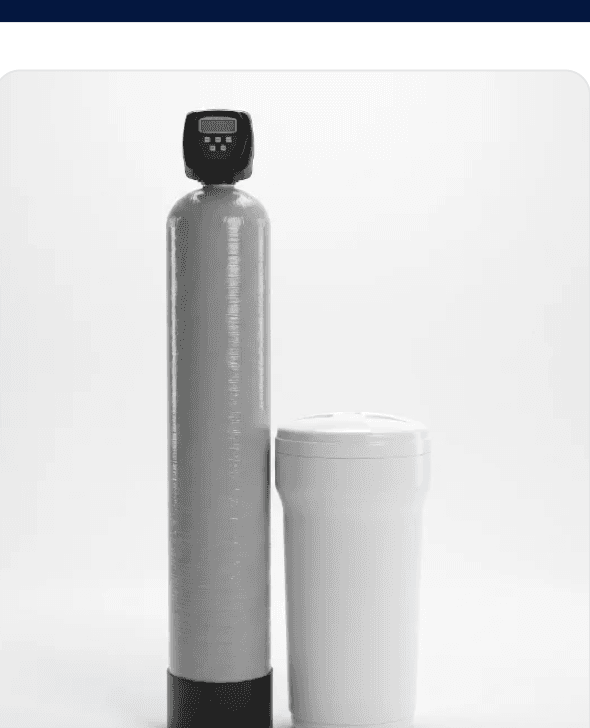
A high-capacity, professional-grade water softener for demanding residential, commercial and light-industrial use…
View product →